
Introduction
When it comes to keeping your home clean, few challenges feel more frustrating than discovering a stain on your carpet, upholstery, or car interior right when you don’t have access to a full-sized cleaning machine. Whether it’s a spill on the living room rug, a splash on your couch, or something unexpected in your vehicle, these moments remind us why having a practical cleaning solution on hand matters.
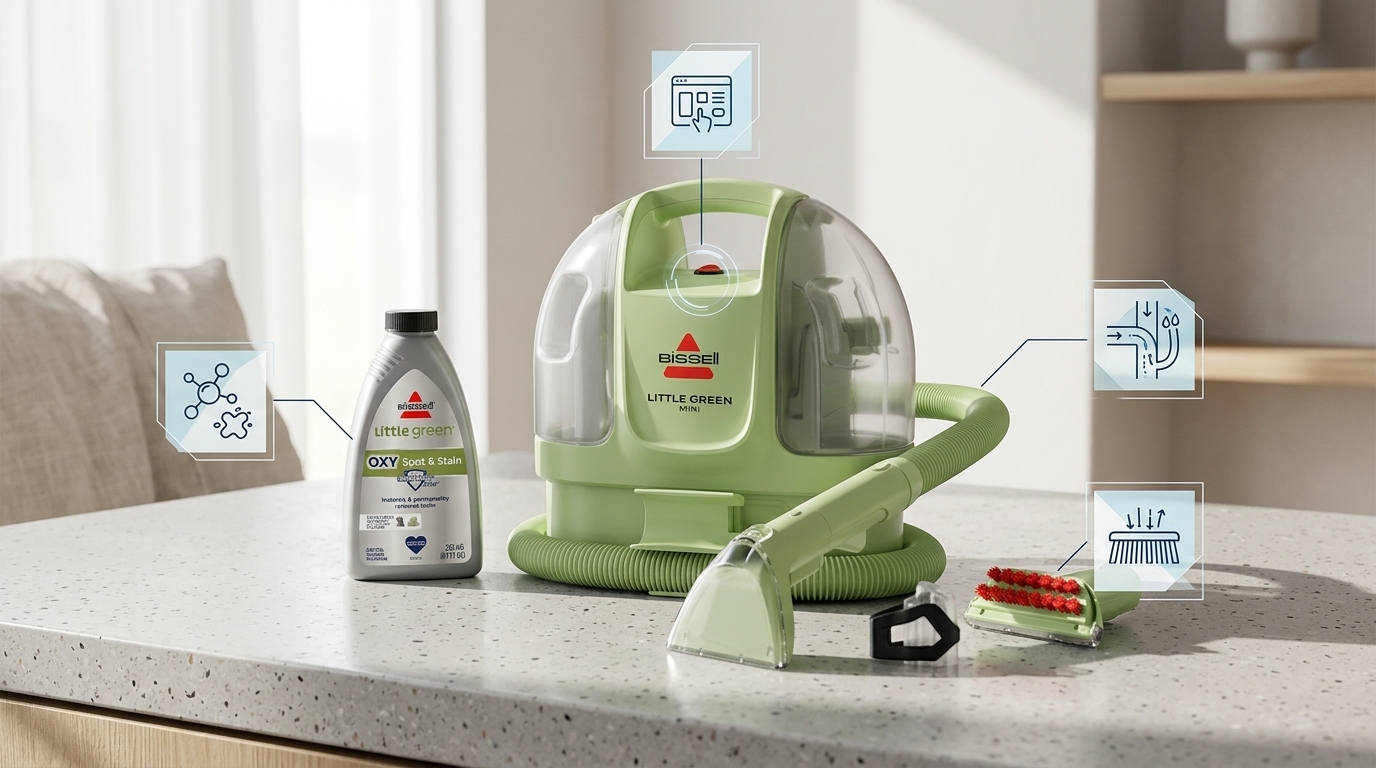
Portable carpet cleaning machines have become increasingly popular because they bridge a gap in home maintenance. Unlike traditional full-size cleaners that require significant storage space and setup time, portable options offer convenience for quick interventions. The BISSELL Little Green Mini Portable Carpet Cleaner represents one approach to this category, designed to tackle spot cleaning jobs across multiple surfaces throughout your home and vehicle.
This article explores what this portable cleaner is, how it functions, what you might use it for, and practical considerations to keep in mind. The goal is to provide you with enough information to understand whether this type of cleaning tool could fit into your household routine and how to think about using it effectively.
Understanding the BISSELL Little Green Mini: What It Is
The BISSELL Little Green Mini is a lightweight, portable carpet and upholstery cleaning machine. Unlike spot-cleaning products you spray and vacuum up, or traditional large upright cleaners, this machine actively injects and extracts cleaning solution into and out of fabric surfaces. The device operates on electricity, heating water and combining it with cleaning formula to address soiling issues on a smaller scale than full-sized carpet cleaners.
The “portable” designation is important here. These machines are intentionally built to be manageable in terms of weight and size, allowing them to be stored in closets, under stairs, or in vehicle trunks. This different approach from large machines means different considerations, different capabilities, and different use cases.
Key Features of the BISSELL Little Green Mini
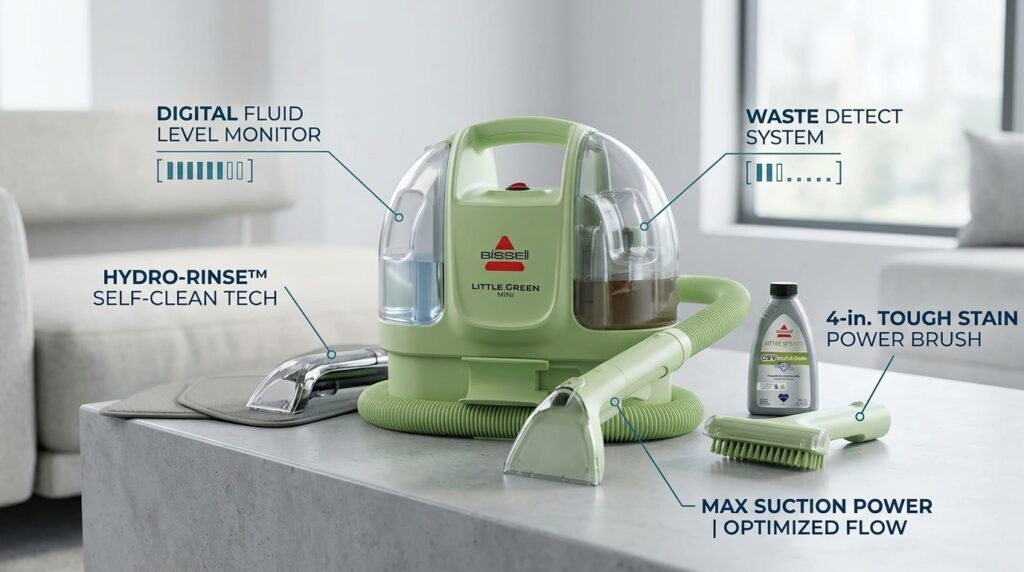
The HydroRinse Self-Cleaning Tool
One of the distinguishing features of this model is the HydroRinse self-cleaning tool. This component is designed to clean itself after use, which addresses a common complaint about carpet cleaning tools: the maintenance burden. Without a self-cleaning function, tool bristles and spray jets can retain residue and become breeding grounds for odors and mildew if not properly maintained.
The self-cleaning functionality means that after you finish a cleaning session, you can run a cleaning cycle through the tool itself using just water or water with a small amount of cleaning solution. This process helps clear out debris and solution from the tool’s internal passages and bristles. While this feature reduces some maintenance work, it’s worth noting that thorough tool care still requires attention—it’s simply less intensive than it might otherwise be.
The 4-Inch Tough Stain Tool
This particular attachment is designed with a smaller surface area and is marketed for handling challenging stains. The four-inch width is considerably narrower than many carpet cleaning machine heads, which means it’s intended for precision work on specific problem areas rather than broad surface cleaning.
A smaller tool can access areas that larger tools can’t, such as between couch cushions, along the edges of furniture, or in tight spaces within vehicles. The specific bristle or jet design of this tool is created with stain-fighting in mind, meaning the spray jets and extraction suction are configured to target stubborn soiling more directly than a general-purpose tool might.
Versatility Across Surface Types
The model is marketed for use on multiple surface types: carpets, upholstery, and car interiors. This versatility suggests the machine is designed to work across a range of fabric densities and weave patterns. Carpeting in your home typically differs significantly from furniture upholstery, which differs from car seat materials, yet the same machine is intended to handle all three.
This multi-surface capability is a practical consideration. Rather than purchasing separate machines for different rooms or applications, a single portable unit can address various cleaning needs. However, this versatility also requires the user to adjust settings or techniques depending on the specific surface being cleaned, as different fabrics respond differently to moisture and scrubbing action.
The Tea Green Color Option
While functionality matters most, the aesthetic consideration of having the machine in your home shouldn’t be dismissed entirely. BISSELL offers this model in a tea green color, which differs from the typical black or white you might see in many cleaning appliances. For people who appreciate that their tools fit into their home’s visual environment, this color option can be appealing.
How the Machine Works: The Basic Process
Understanding how portable carpet cleaners operate helps clarify what they can and cannot accomplish. The BISSELL Little Green Mini follows the same general principle as larger carpet cleaning machines, but in a more compact form.
The process involves several steps. First, the machine heats water and mixes it with cleaning solution or allows you to add concentrated cleaner. When you press the solution trigger, the machine sprays this mixture onto the surface—in this case, carpet, upholstery, or vehicle interior. Simultaneously, the suction mechanism pulls moisture and soiling out of the fabric, collecting it in a separate dirty water tank.
This “wet extraction” approach differs from steam cleaning, dry cleaning, or simple spot-treatment sprays. It’s the same technology used in professional carpet cleaning and full-sized consumer machines, adapted to a portable scale.
The cleaning effectiveness depends on several factors: the concentration and chemistry of the solution, the temperature of the water, how much time the solution spends on the fabric before extraction, the pressure applied, and the nature of the staining itself. Different stains require different approaches—fresh stains often respond differently than set-in ones, and various materials stain differently.
Practical Applications and Use Cases
Addressing Household Spills and Accidents
The most straightforward application is handling spills on home carpeting. When something liquids or foods end up on your carpet, immediate action typically yields better results than waiting. Having a portable cleaner on hand means you can attend to the problem within minutes rather than hours, which can make a meaningful difference in whether a stain becomes permanent.
The same applies to pet accidents or incidents involving children. Rather than waiting for a professional cleaner or renting equipment, you can quickly treat the affected area yourself.
Furniture and Upholstery Maintenance
Upholstered furniture is where portable cleaners truly shine compared to other spot-treatment methods. Couches, chairs, and cushions accumulate soiling over time—food particles, body oils, dust, and occasional spills create a need for periodic cleaning. While dry cleaning services exist for valuable furniture, many household pieces don’t warrant professional cleaning every time they need attention.
A portable cleaner allows you to proactively maintain upholstery between professional cleanings or as your sole cleaning method for regularly-used furniture. This is particularly relevant for high-use pieces like the family room couch or home office chair.
Vehicle Interior Cleaning
Cars spend a lot of time in use, and their interiors experience considerable traffic. Spills happen in vehicles perhaps even more readily than at home—drinks in cup holders, melted food, muddy footprints on floor mats and seats. The compact size of a portable machine makes vehicle interior cleaning more feasible than hauling a full-sized carpet cleaner to your driveway.
Additionally, vehicles have relatively confined interior spaces. The smaller cleaning tools included with portable machines often work better in these tight spaces than would a large machine head, and the machine’s footprint allows it to fit in a vehicle trunk easily.
Stair and Entryway Maintenance
Staircases and entryways face particular challenges because they’re high-traffic areas with concentrated soiling. A full-sized carpet cleaner can be awkward to maneuver on stairs, whereas a portable option’s lighter weight makes this task more practical. Similarly, entryways where soil is tracked in regularly benefit from spot cleaning that doesn’t require moving and setting up extensive equipment.
Addressing Problem Areas in Homes with Larger Carpeting
For people who have wall-to-wall carpeting but don’t need to clean everything simultaneously, portable machines offer a practical solution. Rather than renting or purchasing a full-sized machine to clean an entire carpeted room, you can handle high-traffic zones, specific stains, or problem areas as needed.
Maintenance and Care Requirements
While the HydroRinse self-cleaning feature reduces some maintenance burden, owning a portable carpet cleaner involves ongoing care obligations.
Cleaning Solution and Water Chemistry
The machine requires appropriate cleaning solution. Using plain water only may be less effective than using recommended solutions. However, using incorrect solutions or concentrations can damage fabrics, create residue buildup in the machine, or cause other problems. Understanding what solutions work with your machine matters.
Additionally, water hardness in your area affects machine performance. Hard water can create mineral buildup in the heating element and spray jets, potentially reducing effectiveness over time. Some users in hard water areas employ descaling solutions periodically to maintain optimal performance.
Tank Maintenance
The portable cleaner has two tanks: one for clean solution and one for dirty water collection. Between uses, the dirty water tank should be emptied and rinsed to prevent mold, mildew, and odor development. The clean water tank should be stored with any remaining solution removed to prevent stagnation.
Tool and Brush Care
Although the self-cleaning feature helps, the tools themselves require periodic manual cleaning. Hair, debris, and residual solution should be cleared from bristles and spray jets. Some users find using a small brush or toothpick to clear jet openings necessary for optimal spray patterns.
Power Cord and Housing
Like any electrical appliance, protecting the cord from damage and keeping the housing dry when not in use helps ensure longevity. Allowing the machine to dry completely before storage prevents internal corrosion or electrical issues.
Storage Considerations
Where you store the machine matters. The heating element can be affected by extreme temperatures, and moisture in storage environments can cause problems. A climate-controlled closet or basement is ideal, while garages or sheds with significant temperature fluctuations or humidity may not be optimal.
Understanding Limitations and Realistic Expectations
Portable cleaners serve an important niche, but understanding what they’re not designed to do helps set appropriate expectations.
Scale of Operation
These machines are designed for spot cleaning and small-area treatment. A single session might cover a few square feet rather than entire rooms. If you need to clean all carpeting in a large room, you’d need multiple sessions or extended operations, which depletes the clean water supply.
Fresh Water Supply and Tank Capacity
The clean water tank on a portable machine holds less water than larger models. This means you can perform fewer cleaning passes before needing to refill. For large stains or heavily soiled areas, you might run out of solution partway through the job, requiring you to stop and refill.
Extraction Power
Smaller machines have less powerful suction than full-sized models. While they do extract significant moisture, they may not remove as much water as larger machines. This means drying times might be somewhat longer, and residual moisture in carpeting or upholstery could persist longer than with professional-grade equipment.
Heating Capability
The water heating in portable models may not reach the same temperatures as larger machines. Water temperature affects cleaning effectiveness, particularly for heavy soiling. Some stains respond much better to hot water extraction than to warm or cool water, so this is a meaningful limitation.
Solution Effectiveness on Severe Soiling
The combination of limited heat, moderate suction, and smaller tool sizes means deeply ground-in dirt, pet urine, or severe staining may require multiple applications or might benefit from professional cleaning. These machines excel at maintenance and fresh spill treatment but may disappoint if used as a substitute for professional deep cleaning.
Who Might Find a Portable Carpet Cleaner Useful
Households with Pets
Pet ownership brings cleaning challenges. Accidents, shedding, and general odor management create an ongoing need for spot cleaning. A portable machine on hand means immediate response capability.
Families with Young Children
Spills, sticky substances, and the general wear that comes with children make upholstery and carpet cleaning more frequent. A readily accessible portable cleaner can reduce the stress of inevitable accidents.
Small Living Spaces
Apartment dwellers, people in condos, or anyone with limited storage space might find a portable machine more practical than full-sized alternatives. The smaller footprint stores more easily in compact homes.
Vehicle Owners Concerned with Interior Maintenance
People who take pride in vehicle cleanliness or who have high-usage vehicles (especially with multiple passengers or children) may appreciate having cleaning capability without the hassle of professional detailing for every spill.
People Seeking Convenience Over Perfection
Some individuals prioritize having a functional tool readily available for quick intervention over achieving the absolute best possible cleaning outcomes. For these users, a portable option that delivers reasonably good results immediately is more valuable than perfect results that require significant planning or professional services.
Multi-Story Homes
Lugging a heavy carpet cleaner up and down stairs is not appealing to most people. In multi-level homes, a lightweight portable option becomes more practical for spot treatment on different floors.
Comparison with Other Cleaning Approaches
Versus Rental Machines
Full-sized carpet cleaning machines are available for rent from hardware stores and supermarkets. Rental machines typically offer more power, larger tanks, and greater heating capacity. However, they require transportation, the rental process involves time investment, and costs accumulate. A portable machine is always on hand and ready to use, though it’s less powerful. The trade-off between capability and convenience varies by individual needs.
Versus Professional Cleaning Services
Professional carpet and upholstery cleaning offers superior results for serious soiling or large-area treatment. Professionals have industrial-grade equipment, specialized solutions, and trained expertise. However, professional services are more expensive and require scheduling. A portable cleaner is suitable for maintenance and quick treatment but wouldn’t typically replace professional cleaning for deep restoration.
Versus Spot Treatment Sprays and Manual Cleaning
Spray-on stain removers require no equipment and cost very little, but they rely on manual scrubbing and don’t provide the extraction capability of a wet-extraction machine. They’re fine for minor surface soiling but less effective than machine extraction for anything more substantial. A portable wet-extraction cleaner represents the next step up in capability.
Versus Enzyme-Based or Oxygen-Based Treatments
Products that rely on chemical processes to break down stains work differently than wet extraction. Some people prefer these methods for specific applications, particularly pet-related soiling. These approaches and wet extraction aren’t necessarily mutually exclusive—some people use both methods.
Important Considerations Before Purchase
Frequency of Use Expectations
If you anticipate using the machine weekly or more frequently, ownership makes good sense economically. If you’re thinking you might use it a few times a year for emergencies, the value proposition changes.
Storage Space
While portable machines are smaller than full-sized models, they still require closet space, basement corner, or garage shelf. Confirming you have appropriate storage space before bringing one home prevents frustration.
Cleaning Solution Costs
Beyond the initial purchase, you’ll need cleaning solutions and possibly descaling products. These ongoing costs should factor into your decision. Solutions aren’t expensive individually, but they add up if you use the machine frequently.
Your Fabric Types
Very delicate or valuable furniture might not be appropriate for DIY wet cleaning. Natural fibers like wool or silk sometimes require professional cleaning to avoid damage. Understanding your home’s furniture and carpet materials helps you know which items you can safely treat.
Local Water Conditions
Hard water areas might require more frequent descaling and could reduce machine lifespan. If you live in an extremely hard water region, this represents an ongoing maintenance consideration.
Carpet or Upholstery Condition
If your carpet or furniture is already very old, fragile, or in poor condition, aggressive wet extraction might cause more problems than it solves. Knowing the condition of items you’ll be cleaning helps set expectations.
Frequently Asked Questions
Q: How often should I use the self-cleaning function?
The self-cleaning function should typically be used after each cleaning session to help maintain tool cleanliness. Running water through the tool for a minute or two after use helps clear debris and solution residue. Some users prefer running dilute solution through the tool every few uses for deeper cleaning.
Q: Can I use this machine on delicate furniture?
The machine can technically be used on delicate furniture, but caution is warranted. Test any solution on a hidden area first, use lower suction settings if available, and avoid excessive moisture saturation. Very valuable or extremely delicate pieces might better be handled by professional cleaners.
Q: How long does it take for surfaces to dry after cleaning?
Drying time varies based on how much moisture remains in the fabric after extraction, room temperature, humidity, and air circulation. Typically, spot-cleaned areas dry within a few hours, though thick carpeting or heavily saturated upholstery might take longer. Using fans to increase air circulation speeds drying.
Q: Is the machine loud?
Portable carpet cleaners are motorized and use suction, so they do produce noise. They’re generally quieter than full-sized machines but louder than vacuums. Specific decibel levels aren’t typically published for consumer models, but most users consider them acceptably noisy for household use.
Q: What’s the warranty typically like?
Warranty coverage varies by retailer and region. Most BISSELL machines include some form of warranty covering manufacturing defects, typically ranging from one to three years. Understanding the specific warranty terms for your purchase is important, as is knowing whether you need to register the product.
Q: Can I use any cleaning solution, or does it need to be BISSELL brand?
While BISSELL solutions are formulated for BISSELL machines, some third-party solutions work in these machines. However, using non-recommended solutions risks damage to the machine or ineffective cleaning. Reading the manual about compatible solutions prevents problems.
Q: How much does this machine weigh, and is it difficult to carry?
Portable carpet cleaners typically weigh between 15 and 25 pounds when empty. The BISSELL Little Green Mini is in the lighter range of this spectrum, making it manageable for most people to carry with one or two hands. Individual strength and mobility affect how easily someone can operate and move the machine.
Q: Can I use hot water only without solution?
Yes, water-only extraction works in a pinch and can help remove surface soiling. However, cleaning solutions are formulated to help break down soiling and improve extraction, so solution use typically yields better results. Regular use without solution reduces cleaning effectiveness over time.
Q: Is this machine suitable for stairs?
Yes, the lightweight portable design makes stairs more manageable than with full-sized machines. The small tool allows precision work on individual stair treads. The hose length is important here—longer hoses allow you to position the machine on one step while working on others.
Q: What should I do if the machine stops extracting?
Several issues could cause extraction failure. The dirty water tank might be full. A clog might exist in the suction pathway—check hoses and the tank opening. The filter might need cleaning. Occasionally, the suction motor needs to cool if used extensively. Consulting the manual troubleshooting section or contacting customer support helps identify the specific issue.
Making the Decision
A portable carpet cleaner is a practical tool for households that value the ability to quickly address spills, maintain upholstery, and keep vehicle interiors clean. The BISSELL Little Green Mini represents one option in this category, offering specific features like the HydroRinse self-cleaning tool and the specialized tough stain tool alongside general versatility across carpet, upholstery, and automotive applications.
Whether this tool makes sense for your household depends on your specific circumstances: your cleaning needs, available storage, budget for the initial purchase and ongoing maintenance, and your expectations for results compared to other cleaning approaches.
A portable carpet cleaner isn’t a replacement for professional deep cleaning and isn’t meant for intensive restoration work on severely soiled surfaces. It’s a maintenance tool—something that helps you keep your spaces cleaner between professional services or as your primary maintenance approach for regular spill and soiling management.
The value proposition improves when you realistically anticipate using the machine regularly enough to justify the investment and when you appreciate having a cleaning capability immediately available rather than scheduling or renting. If your household experiences frequent spills, has pets, or includes young children, regular use becomes more likely.
Conclusion
Understanding what a portable carpet cleaner can do, how it works, and what its limitations are allows you to make an informed decision about whether this type of tool fits your household. The BISSELL Little Green Mini offers practical features for spot cleaning across multiple surfaces, with a focus on portable convenience and self-maintenance functionality.
The decision to purchase any household tool ultimately comes down to how well it matches your specific needs and whether the benefits justify the investment and maintenance requirements for your situation. Taking time to consider these factors helps ensure that if you do choose this path, you’re making a decision that serves your household well.