
Introduction
Keeping carpets and upholstered surfaces clean can be challenging, especially when dealing with unexpected spills, pet accidents, or high-traffic areas that accumulate dirt over time. Traditional carpet cleaning methods often involve dragging heavy equipment from room to room or renting professional-grade machines. In recent years, portable carpet cleaning solutions have gained popularity as homeowners seek more convenient ways to address immediate cleaning needs.
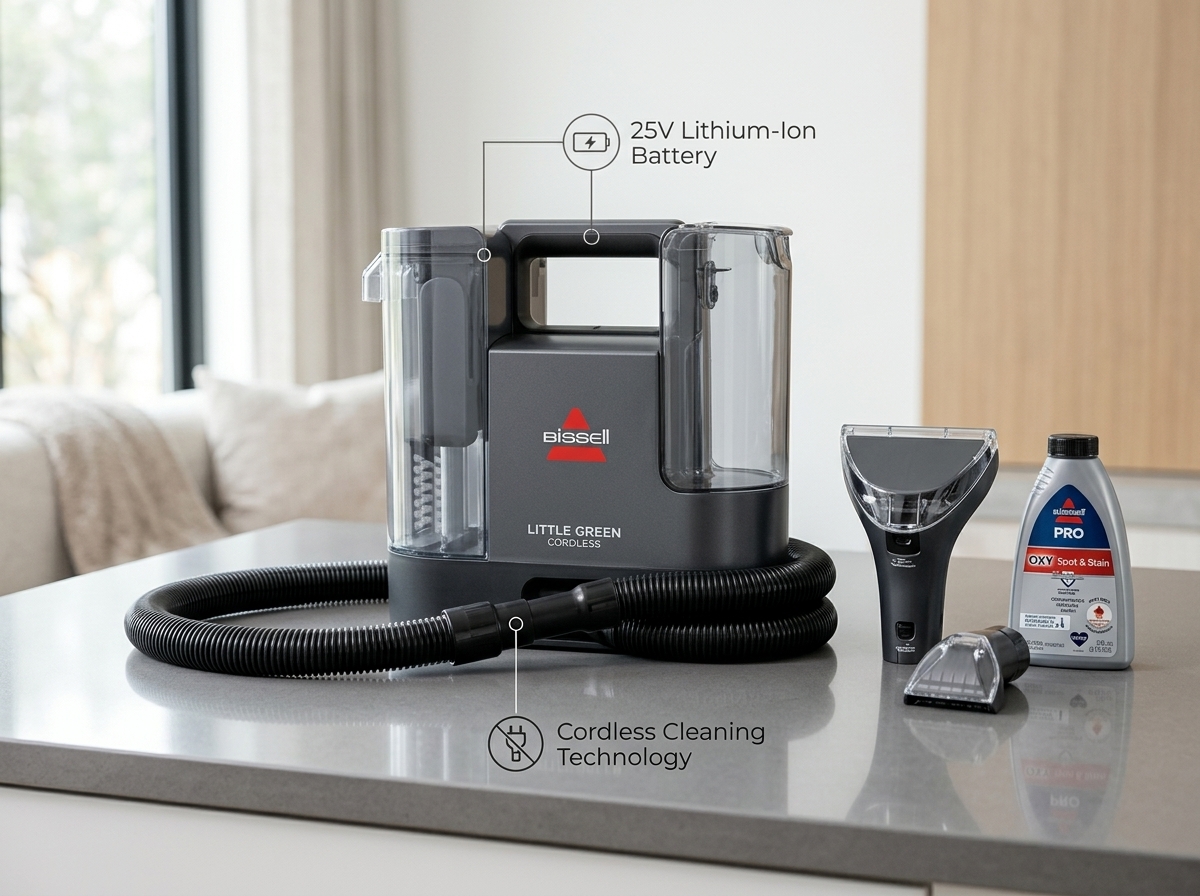
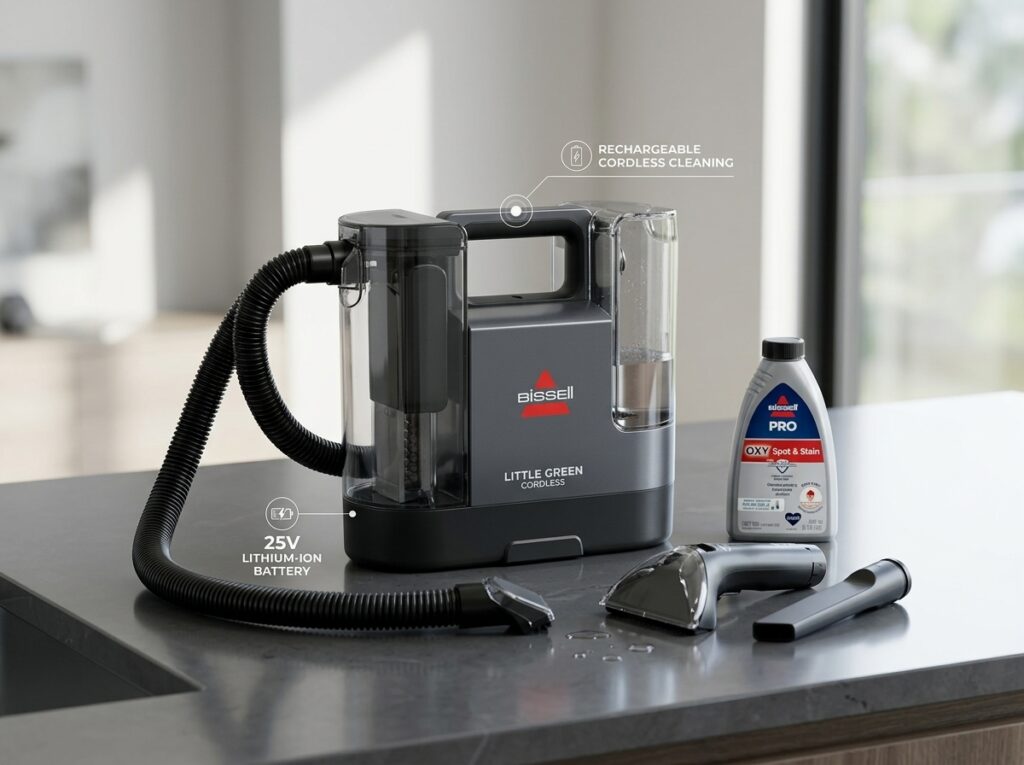
The BISSELL Little Green Cordless Portable Carpet Cleaner (Model 3682) represents a category of cleaning equipment designed for spot cleaning and smaller surface areas. Understanding what this type of device offers, how it operates, and whether it aligns with your household needs requires looking beyond basic product descriptions and examining the actual functionality and practical applications.
This guide explores the features, capabilities, and considerations surrounding cordless portable carpet cleaning technology, with specific attention to what the BISSELL model 3682 brings to this market segment.
Understanding the Core Technology
The most significant aspect of the BISSELL Little Green 3682 is its cordless operating system, powered by a 25V lithium-ion battery. This represents a fundamental shift from traditional corded carpet cleaners, which require proximity to electrical outlets and come with trailing cords that can limit maneuverability.
Lithium-ion battery technology has become standard in various household appliances over the past decade because it offers several inherent advantages. These batteries maintain consistent power output throughout their charge cycle, meaning the machine doesn’t gradually lose suction power as the battery depletes. They also charge relatively quickly compared to older battery technologies and tend to hold their charge when not in use.
The particular battery technology integrated into this model emphasizes extended runtime, which the manufacturer addresses through Battery-Boost Technology. This feature is designed to optimize power delivery, potentially allowing longer operation per charge cycle. For a cordless cleaner, runtime is a practical concern—users need enough operating time to complete cleaning tasks without frequent recharging interruptions.
Key Features and What They Mean in Practice
Cordless Operation
The absence of a power cord fundamentally changes how you interact with the device. You can move freely through rooms, up and down stairs, and into corners without managing a cord or repositioning it as you work. This mobility is particularly useful for vehicles, stairs, and furniture cleaning where cord management would otherwise be cumbersome.
However, cordless operation comes with built-in limitations. The device is dependent on battery charge, which means there’s a finite window of operation before recharging becomes necessary. Users need to understand their typical cleaning session duration and whether it aligns with the device’s runtime capacity.
25V Lithium-Ion Battery System
The voltage specification indicates the power capacity available to the cleaning mechanism. Higher voltage generally correlates with stronger performance in terms of suction power and cleaning force. The lithium-ion chemistry means the battery is rechargeable and designed for repeated charging cycles without significant performance degradation.
Battery maintenance is straightforward with modern lithium-ion systems. These batteries don’t require complete discharge cycles before recharging, and they’re less susceptible to memory effect—a phenomenon where repeated partial discharges gradually reduce battery capacity.
Battery-Boost Technology
This manufacturer-specific technology is designed to deliver consistent cleaning performance throughout the battery’s charge cycle. Essentially, it’s a power management system that maintains optimal performance rather than allowing gradual power decline as the battery depletes. This addresses one of the practical frustrations of cordless appliances—the experience of reduced suction or cleaning power toward the end of a cleaning session.
Portable and Compact Design
The “Little Green” branding hints at the device’s size and portability. Portable carpet cleaners typically weigh significantly less than full-sized upright or canister models, making them easier to carry, store, and maneuver. They’re designed to fit into spaces where larger equipment wouldn’t work—closets, under sinks, or vehicle trunks.
The compact form factor makes these devices convenient for quick cleanups, but it also means smaller water tanks and dust collection capacity, which limits the amount of work you can do before needing to refill or empty containers.
How Portable Carpet Cleaners Function
Understanding how these devices work helps in setting realistic expectations about what they can and cannot accomplish.
Portable carpet cleaners operate on a basic principle: they spray water (often mixed with cleaning solution) onto a surface, then immediately extract the liquid back up through suction. This combination of moisture application and extraction is what distinguishes them from dry vacuuming or simple surface cleaning.
The process typically works like this: you fill a clean water tank with water and cleaning solution according to manufacturer guidance, activate the spray mechanism, and move the cleaning head across the soiled surface. The device simultaneously sprays moisture and suctions it back into a separate tank. You then empty the dirty water tank and repeat the process until the surface reaches your desired level of cleanliness.
For a cordless model, this means the battery must power both the suction mechanism and the water spray pump simultaneously, which affects overall runtime. The battery-boost technology becomes relevant here—it’s working to maintain adequate power for both functions throughout the cleaning session.
Practical Applications and Use Cases
Portable carpet cleaners serve different purposes than traditional full-sized models, and understanding these differences helps determine whether this type of equipment fits your needs.
Spot and Stain Treatment
These devices excel at addressing individual stains, spills, and localized soiling. A child’s juice spill on the living room carpet, a pet accident, or muddy footprints tracked into the entryway are precisely the scenarios where portable cleaners prove useful. The quick deployment and cordless convenience make responding to these incidents straightforward without the setup time required for larger equipment.
Upholstered Furniture Cleaning
The compact size and maneuverability of portable models make them well-suited for sofas, chairs, and other furniture pieces. Many people find these devices useful for refreshing upholstered surfaces between professional cleanings. Stairs and furniture corners—areas where larger upright cleaners struggle—become more accessible.
Vehicle Interior Maintenance
Car interiors, including seats, carpeted floors, and floor mats, benefit from spot cleaning capabilities. The portability eliminates the need to drag equipment outside or rely on professional services for minor interior stains. RV owners and people with high-mileage vehicles often find these tools useful for regular maintenance.
Small Spaces and Rental Properties
For apartment dwellers or people managing rental properties, portable cleaners offer storage advantages. They occupy minimal space, making them practical for those without dedicated cleaning supply storage.
Quick Cleanup Between Deep Cleanings
These devices work well as interim solutions between professional carpet cleanings or when using full-sized rental equipment. They handle the minor accumulation that happens regularly without requiring major equipment deployment.
Who This Equipment May Benefit
Certain household situations and cleaning priorities align well with cordless portable carpet cleaner technology.
Pet Owners
Households with pets experience regular small spills, accidents, and tracked-in dirt. The ability to quickly address these incidents prevents stains from setting and extends the time between professional cleanings. Pet owners who deal with frequent minor carpet incidents often find the convenience worth the investment.
Households with Young Children
Spills, accidents, and tracked dirt are inevitable with young children. Quick access to spot cleaning equipment reduces stress around everyday messes and can help protect carpet investment.
People in Smaller Living Spaces
Those with limited storage space or apartment living situations find cordless portable cleaners practical because they don’t require dedicated storage areas or special maintenance spaces.
Allergy or Cleanliness-Conscious Individuals
People who are particular about maintaining clean surfaces appreciate the ability to address spills and soiling immediately, before allergens or bacteria have time to proliferate.
Vehicle Owners Concerned with Interior Maintenance
Anyone who spends significant time in vehicles and wants to maintain interior cleanliness without professional service visits might find this equipment useful.
Important Considerations Before Investing
While cordless portable carpet cleaners offer convenience, several practical factors warrant careful consideration.
Battery Runtime Limitations
No matter how advanced the battery technology, runtime is finite. If your typical cleaning session exceeds the device’s operational time on a single charge, you’ll need to pause and recharge mid-session. This is worth evaluating against your actual cleaning needs.
Water Tank Capacity
Portable models have smaller tanks than traditional cleaners. This means more frequent refilling of clean water and emptying of dirty water, which can interrupt your workflow and extend the time needed to complete larger cleaning projects.
Cleaning Coverage Area
These devices excel at spot cleaning but aren’t designed as replacements for full-sized carpet cleaning equipment when you need to clean an entire room or large surface area. The combination of limited tank capacity and battery runtime makes them ill-suited for whole-room projects.
Learning Curve
While simpler than some appliances, using these cleaners effectively requires understanding proper technique. The optimal cleaning happens when you move the device at the right speed, with adequate water application and extraction. Moving too quickly or too slowly affects results.
Maintenance Requirements
Like all water-based cleaning equipment, these devices require regular maintenance. Water tanks need cleaning and drying between uses to prevent mold and bacterial growth. Filters need periodic cleaning or replacement. Tubes and nozzles can become clogged with mineral deposits or debris, requiring attention.
Not Suitable for Delicate Fabrics
Some fabrics, especially antique upholstery or delicate materials, may not tolerate the moisture and agitation these devices provide. Testing on inconspicuous areas before widespread use is prudent.
Moisture Management
Portable cleaners add moisture to surfaces. In humid climates or poorly ventilated spaces, this moisture can take considerable time to fully dry, potentially creating conditions for mold or mildew growth if not properly managed.
Comparing Categories: Portable Cordless vs. Alternative Solutions
Understanding how portable cleaners fit into the broader landscape of carpet cleaning options helps clarify whether this is the right approach for your situation.
Portable Cordless Models vs. Corded Portable Cleaners
Corded portable cleaners eliminate battery limitations but introduce cord management challenges. The choice between cordless and corded essentially represents a tradeoff between convenience and unrestricted runtime. Cordless models offer mobility; corded models offer unlimited operation as long as you’re within cord reach of an outlet.
Portable Cleaners vs. Full-Sized Upright or Canister Models
Full-sized equipment has substantially larger water tanks, more powerful motors, and greater overall cleaning capacity. They’re designed for whole-room cleaning projects and handle larger surface areas efficiently. However, they’re heavier, require more storage space, and are less convenient for quick spot cleaning.
Portable Cleaners vs. Dry Cleaning Methods
Dry cleaning powders, enzyme-based sprays, and other non-moisture methods require no equipment and no drying time. However, they’re generally less effective on wet or heavily soiled areas and require vacuuming afterward. Moisture-based cleaning is more thorough but requires more drying time.
Portable Cleaners vs. Professional Cleaning Services
Professional services provide the most thorough cleaning with commercial-grade equipment. They’re ideal for deep cleaning but are significantly more expensive and require scheduling. Portable cleaners serve the gap between professional services, allowing homeowners to maintain carpets between professional visits.
Understanding Cordless Carpet Cleaner Technology Trends
The cordless portable cleaner market has evolved considerably in recent years as battery technology has improved. Modern lithium-ion batteries have enabled manufacturers to create more powerful cordless devices that would have been impractical with older battery chemistry.
The integration of technology like Battery-Boost represents manufacturers’ efforts to address the core challenge of cordless cleaning equipment—balancing runtime with consistent performance. As this technology category continues developing, we see refinements in power management, battery capacity, and motor efficiency.
Understanding these trends helps contextualize what the BISSELL model 3682 represents within the cordless cleaning equipment landscape. It’s a device built on mature, proven battery technology applied to a specific cleaning use case.
Frequently Asked Questions About Cordless Portable Carpet Cleaners
How long does the battery typically last on a single charge?
Runtime varies depending on the specific model, water temperature settings, and cleaning intensity. For cordless carpet cleaners, typical operation is measured in minutes rather than hours. Users should expect ranges anywhere from 15-45 minutes depending on the device and usage patterns. The BISSELL model 3682’s runtime depends on specific operating conditions and whether Battery-Boost technology is engaged.
Can I use these cleaners on all carpet types?
Most portable cleaners work on standard carpet, but some carpet types or conditions require caution. Low-pile carpets generally work well, while high-pile or delicate carpets may require gentler handling. Always test on inconspicuous areas first.
How often do water tanks need to be emptied and refilled?
This depends on tank size and the area being cleaned. For spot cleaning, you might complete several stains before needing to refill. For larger areas, you’ll refill more frequently. Users should plan for regular tank maintenance during cleaning sessions.
What’s the proper maintenance routine?
After each use, empty dirty water, rinse tanks with clean water, and allow them to dry completely. Periodically clean spray nozzles and extraction tubes to prevent clogging. Check filters according to manufacturer guidelines and replace them when they become soiled.
Can these devices handle pet odor?
While the moisture and suction address visible soiling, dealing with pet odor effectively often requires enzymatic cleaners or treatments specifically designed for odor elimination. These devices remove the moisture but may require combination with specialty products for complete odor control.
How does the cordless feature affect cleaning performance?
Cordless operation doesn’t inherently affect cleaning performance compared to corded models of similar size. Both rely on suction power and water application. The difference is operational convenience versus unlimited runtime.
Are replacement batteries available?
For most modern cordless equipment, replacement batteries are available, though they typically represent a significant portion of the device cost. Understanding battery availability and pricing is prudent before purchase.
What’s the warranty situation?
Warranty varies by manufacturer and region. Battery coverage is often separate from device coverage. Understanding what’s covered during the warranty period is important, particularly regarding battery replacement.
Conclusion
The BISSELL Little Green Cordless Portable Carpet Cleaner (Model 3682) represents a category of equipment designed to address specific cleaning needs: quick spot cleaning, furniture upholstery, stairs, and vehicle interiors without the inconvenience of power cords or the commitment of full-sized equipment. Its cordless operation, powered by 25V lithium-ion battery technology with Battery-Boost features, makes it well-suited for homeowners seeking convenient spot-cleaning solutions.
Whether this type of equipment serves your situation depends on several factors: your typical cleaning needs, available storage space, whether you prioritize convenience over unlimited runtime, and your household’s frequency of spills or soiling that requires quick response. For pet owners, households with children, or anyone who deals with regular small cleaning incidents, cordless portable cleaners offer legitimate practical advantages.
The device isn’t a replacement for full-sized equipment when you need comprehensive carpet cleaning across large areas, nor is it designed as a premium alternative to professional cleaning services. Rather, it occupies a practical middle ground—convenient, accessible, and effective for the specific tasks within its design scope.
Understanding both the capabilities and limitations of cordless portable carpet cleaner technology ensures you make an informed decision about whether this approach aligns with your household cleaning strategy and lifestyle.